Barely Useful Beats Perfect
A car wash wanted an RFID rewards program. We tested the idea with a digital punch card in three weeks instead. Two months later, about half the regulars had signed up.
Barely Useful Beats Perfect
Every business has a version of this conversation. Someone has a good idea. Before anyone checks whether customers want it, it’s grown hardware, integrations, a six-month roadmap and a budget that needs its own meeting.
Meanwhile, the original problem is still sitting there. Waiting. Patiently. And when the “proper” solution finally arrives, it sometimes turns out nobody needed half of it.
My bias is the opposite. Build the smallest thing that solves one real problem, put it in front of real people this week, and let their behavior tell you what to build next. Barely useful beats perfect, because barely useful actually exists.
The car wash that almost bought a radio tower
A client ran a car wash business with several locations in northeast Mexico. He wanted a rewards program so loyal customers would get discounts and keep coming back.
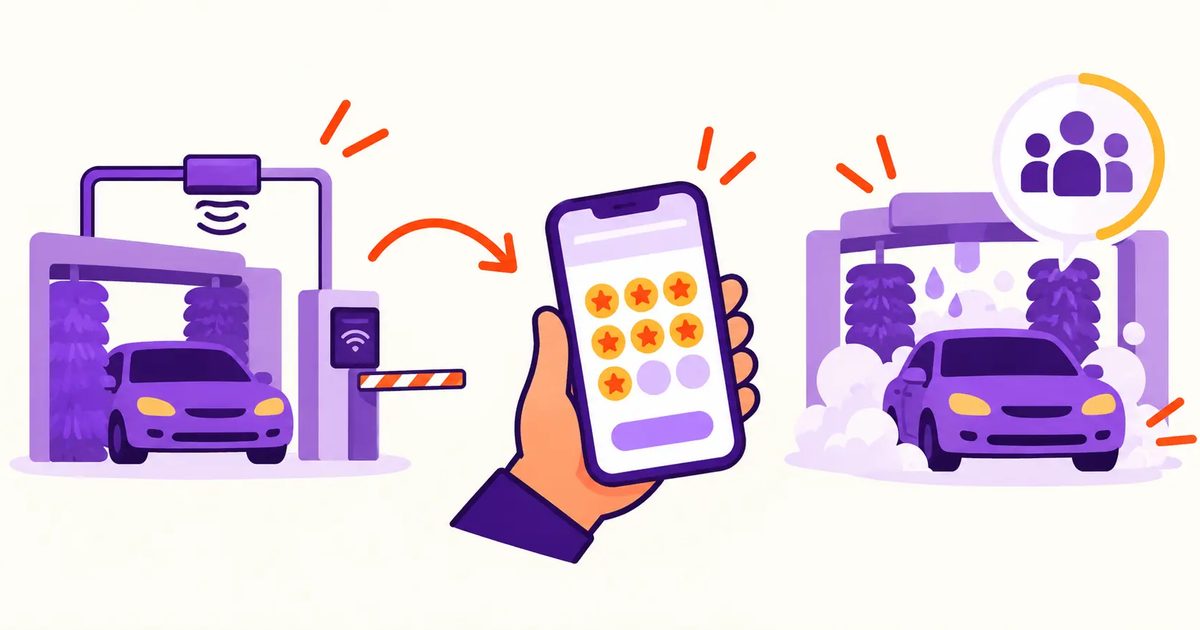
His plan was RFID. Every customer would get a tag, scanners at each location would read them, and every wash and reward would be tracked automatically.
It’s a good idea at heart. Rewarding loyal customers keeps them around, and happy regulars are the ones who recommend you. The problem was the price of finding out whether it worked. Long-range outdoor RFID readers are, more or less, tiny radio towers that need babysitting: specialized hardware with regular maintenance to keep it working. Each new customer meant another tag to buy and set up. That’s a lot of money to put down before knowing if anyone even cares about the rewards.
He was picturing the best possible experience for his customers, which is exactly where you want a business owner’s head to be. The only catch was the order: the most expensive version came first, before anything had shown it was worth it. I flagged that early, once I’d looked into hardware pricing and upkeep, so he had the full picture and the decision stayed his.
So I proposed the barely useful version. We kept his rewards card, the classic “5 washes, the 6th is free,” but put it in Google Wallet and Apple Wallet. Customers without a wallet app could use a QR code backup, with a minimal web app behind it. No connection to the point-of-sale system. Staff stamped the cards as part of their normal routine. From requirements to a working pilot at one location took about three weeks.
At first he was disappointed. He’d pictured scanners and tags, and I was handing him a digital punch card. But we weren’t saying no to RFID. We were saying not yet. The plan was to run this marathon kilometer by kilometer: the punch card was the first one, and if the results said the bigger investment was the right move, we’d make it.
It worked. Rolling it out was just a matter of promoting the rewards card at the counter. No hardware to install, no new devices for staff to learn. Two months in, with the card running at three locations, about 200 customers had signed up. By his own count, that was roughly half of his regular customers, plus some first-time ones. The last time we talked, the only thing they’d started building on top of it was a connection to the point-of-sale system. That’s the next obvious kilometer, and now they know it’s worth paying for.
The idea wasn’t the problem
His idea wasn’t bad. From the customer’s side, it was arguably the best one: drive in, get scanned, rewards just happen. The problem was that it rested on assumptions nobody had tested yet. Would customers care about rewards? Would they sign up? Would they come back more often? Each of those was a guess, and the plan stacked expensive hardware on top of all of them.
So we didn’t throw his idea away. We treated it as the goal and figured out why he wanted it in the first place: loyal customers who come back and recommend him. Then we looked for the smallest step that delivered real value now and answered those questions at the same time. The digital punch card wasn’t the opposite of his plan. It was the cheapest way to check whether his plan was worth building.
Where ”barely useful” fails
“Barely useful” doesn’t mean careless, and it isn’t the right call everywhere.
Some things can’t be rough on day one. That includes anything touching money, people’s personal data, security, or legal and tax records. A punch card that misses a stamp is an annoyance. A payment flow that double-charges is a crisis. Build those properly from the start.
It also fails when nobody owns the next step. A quick first version is a first kilometer, not the finish line. If there’s no plan to learn from it and improve it, it turns into the permanent hack everyone works around.
The test I use has three questions:
- What’s the one pain we’re removing?
- Who will actually use this next Monday?
- What can we leave out without hurting either answer?
If the answers are clear, start small. If they aren’t, no amount of perfect will save it.
Not a radio tower yet
The car wash didn’t need a radio tower yet. It needed to know whether people cared about free washes. Three weeks and a digital punch card answered that. If RFID ever happens, it’ll be built on what they’ve learned, not on guesses.
Got your own radio tower on the roadmap? Tell me the messy version. We’ll find out what’s under it before pouring anything.